


Search results
-
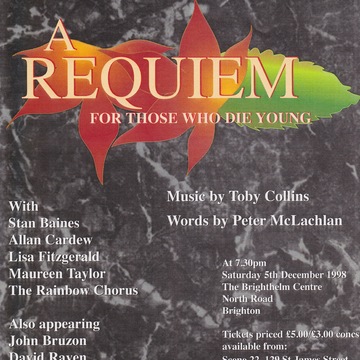 A Requiem For Those Who Die Young Flyer (1998)
 -
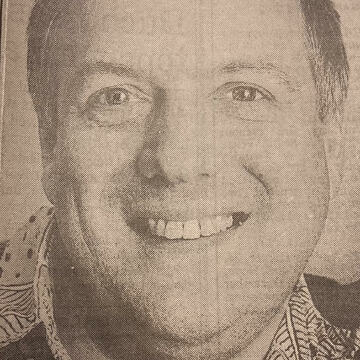 Alan Clarke Alan Clarke was the second director of the Sussex AIDS Centre and Helpline on Cavendish Street and worked hard to raise awareness on AIDS related issues. He made the news in 1991 after calling for Brighton & Hove businesses to give their employees a personal supply of condoms to help stop the spread of the virus. Alan tested positive in 1988, and died peacefully aged 46 on the 31st July 1996. His funeral service took place at Woodvale Crematorium on the 7 August, and as a mark of respect the Sussex Aids Centre and Helpline closed that day. Alan requested that no flowers be sent, but asked instead for donations to the Sussex AIDS Centre Equipment fund and the Sussex Beacon.
 -
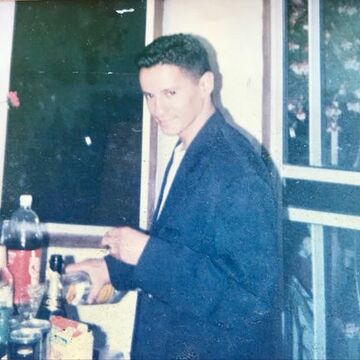 Andrea Philippe Regard Born - 16 March 1965 – Sao Paulo Died – 13 May 1991 – Ward Six, Hove General Hospital Andrea Philippe Regard was a young talented Brazilian florist who worked at and lived above Jane Greenwoods on Gardner Street. Always a lover of convenience in any shape or form, when my café opened to replace the tool shop opposite, he was overjoyed. Andrea had little need for power tools, unless attached to someone suitably swarthy, but he loved a good coffee. And so it was that after a few trips across the street, he was part of the furniture and a day rarely passed without his presence. Andrea would generally sashay in at around 10am, order a double espresso and then sit at his customary table. He’d stir in six or more sugar cubes, fingers spread like a cockatoo crest, and then announce his presence by calling down the kitchen stairs in a Zsa Zsa Gabor burr. I’d join him for his tales of our city, which usually began in the Bulldog and ended with his legs in the air somewhere in the area. He had a big appetite for large men; the rougher the better - ‘straight’ tradesmen a speciality. They couldn’t get enough of his boyish good looks, big brown eyes and one-liners and nor could I. One day, he came in looking particularly worse for wear, but still smiling as always. My ‘what happened to you’ was met with a wry smile as he recounted a gymnastic session with a plumber from Bath who’d been working away from home and wife. Jack was lean, muscular and six foot two - bingo. After last orders, Jack had lured Andrea back to a nearby derelict building where he was staying and working. They’d fucked like the world was ending, but after a grunting climax, Jack’s face flooded with guilt so Andrea made his excuses and left. Hungry drunk when he arrived home, Andrea decided on a Fray Bentos steak pie which he plunged into a pan of water and set to boil. An hour or so later just as dawn was breaking, he was jolted awake by the exploding pie which had turned the kitchen into an insane scatological Jackson Pollock with added shrapnel, but he didn’t care. ‘It’s a new look darling, they’ll all want it.’ Glitter ball Andrea loved a party, and his 25th birthday was a great excuse to throw one. At the time the cafe was on a roll and the queer place to hang so it seemed a natural choice for a venue. Plans were made and invitations sent out in embossed bespoke envelopes. On the day, we closed early and laboured to transform the space into a palace befitting a queen. It wasn’t quite Versailles, but we did a fine job trying to recreate it with miles of ribbon, sumptuous fabrics, arum lilies and balloons. We hung, draped, squeezed and pinned into every available space. The food had to match the flamboyance, so canapés mimicking the blooms in Andrea’s florist were made – Arum lilies of curled calamari with stamen of sweet pepper, roses of salami and chorizo and devilled egg daisies amongst others. Local shops were stripped of their Champagne and spirit supplies, glasses polished and ice crushed. This was to be the party of the year and everyone invited came - there were no excuses. Shoulder pads, evening gowns and the loudest shirts in Christendom jockeyed to congratulate and adore Andrea. There was a wonderful infectious exuberance in the room, thanks to North Laine traders and the gay scene out for a good time. Before long, hips were shaking to the finest indie, funk and crowd pleasers, as Andrea flitted resplendent in a bespoke Katherine Hamnett suit of black bejewelled fabric that glittered like a night sky. Hindsight explains the weight loss since his measurements were taken. The suit was meant to be roomy and flowing, but I noticed that it hung from him. At the time he would have brushed this off with some excuse about a new diet, but then he was always ‘feeling fat’ and on some diet or another. Of course, looking back now, it’s clear that he was already ill but perhaps unaware. Knowing might have helped him change aspects of his lifestyle, but there was no medication then. Knowledge of your status was not the power to take control it is today, it simply signposted a death sentence, and there was nothing positive about it. He was buried in that suit, no doubt to make a good impression when flirting with St Peter. ‘Lovely wings darling.’ There is a light that never goes out Andrea ate much of his food at the café and usually I’d rustle up something he fancied to order from the supplies at hand. If memory serves, his favourite dish was a steaming plate of pasta with a creamy mushroom and bacon sauce, covered with an inch of parmesan cheese. But a half portion, because he was on a diet, naturally. I first remember concerns circling like black crows when Andrea started to lose his ravenous appetite and more of the little weight he carried on his slight frame. The boyish good looks and olive skin seemed to be fading like fabric left out in the sun. When we spoke about it, he brushed my concerns aside and always seemed to have a perfectly reasonable explanation. I remember him looking me square in the eye and saying there was absolutely nothing to worry about. But a dark anxiety and paranoia raged amongst gay men in those days and even a bad cold would have people jumping to conclusions. I was happy to believe what he told me for my own reasons of denial. Some time passed and I began to notice a swelling on the left side of Andrea’s neck. This time it was an infection that was being treated he said, nothing to worry about, but my fears were back. At the time I was working as a volunteer for the Sussex AIDS Centre and Helpline and could not help but fear the worst. When the swelling grew to the size of an orange, cocking his head to the right I had to share my fears, but any mention of the virus was smothered, the idea dismissed and the subject quickly changed. In hindsight I wish I had done more, but realistically it was already too late. Perhaps I saw, or feared, something in his face that I had already seen before. Very late one night my telephone rang and it was Andrea. He was clearly deeply upset and requested that I come over to see him. I dressed quickly and crossed the empty street as a fox slunk into the shadows. Andrea opened the door in tears and I followed him up the stairs to a kitchen still stained by the Fray Bentos Pollock. We sat at a table holding hands and he confirmed my worst fears. All I remember are three words delivered in a terrified yelp, ‘I have AIDS’ - I moved to cradle his dwindling form in my arms and whispered ‘you’ll be OK’ as our tears soaked my shirt. Beaches Andrea never came back to the café or worked again. He was admitted to Ward 6 at the Hove General Hospital, a place few managed to leave in the early 1990s. The ward was isolated from the rest of the hospital at the very top of the building, hidden away from a public fearful of the ‘gay plague’, but also to protect those staying there. Andrea was popular so there was always someone to visit, and I spent Sundays with him when the café was closed. Whenever he talked about his death, I would try to change the subject because I didn’t want to believe it. Andrea though was reconciled to his fate thanks to a Catholic faith which made him fearless and accepting, but also comforted him like a warm blanket on a cold night. It was his time to go and there was nothing that could be done. We would spend time watching movies together, gossiping, and planning visits to Sao Paolo to see the boys, bars and beaches when he ‘got better.’ Andrea would humour the plans, adding detail and anecdotes from his youth. ‘One day we’ll stroll Rua Oscar Freire looking at the boys’ I’d say, but he knew this would never happen. Over the course of two months Andrea disappeared as the virus asset stripped his body. Each visit would see part of him shaved away and his suffering increased. On good days, when light would break through the clouds of his pain, he would tie up loose ends and sell his belongings so that every available penny could be sent home to his family. ‘How much for this do you think? It’s Paul Smith darling. He sounds so boring, but he makes lovely clothes.’ His resolve was iron and my love and admiration for him grew stronger with each day. When awake he was tenacious but always smiling or trying to make me smile. ‘What do think of my new diet? I wanted to lose weight darling, but this is ridiculous!’ I continued to visit Andrea wrapped in a shroud of denial. No one in my life had died and I couldn’t process the situation or imagine him gone so I avoided thinking about it. It felt impossible and ridiculous that he would not get better, he was only 26 for Christ’s sake. One day Andrea requested the movie ‘Beaches’ which I hadn’t seen. All I knew was that it starred Bette Midler, so I expected something lightweight and funny. As the story of terminal illness and friendship flowed from the screen, I began to sob uncontrollably. Andrea held my hand with a rosary squeezed in between and consoled me. ‘I will die soon, because I’m almost ready. Do you believe in angels?’ I replied that I didn’t, ‘well you must,’ he said, ‘because soon I’ll be watching over you.’ Andrea slipped into a coma and died on the 13th May 1991. He was just 26 years old. I think of Andrea often and it’s natural for me to look up to the sky to say hello. He is the kestrel hovering by the roadside, the jet trail hexagram, the crescent moon. 13 May 2021 - 30 years The wind is strong and sharp today, tumbling clouds across the sky like toddlers running a sack race. But the sun shines through to give the blue greens of the hills and sea a flickering vitality. When its warmth glances against my cheek, it’s as reassuring and welcome as a hand caressing my face. I imagine it’s your hand Andrea and that gives me great comfort. Your grave is covered in grass with sprays of daisies and buttercups. There’s no headstone, but after all these years I find you easily enough, almost by instinct – number LAF265. I crouch down and push my finger into the green, feeling the chill of the ceramic plaque I made for you. A nest of ants has made their home here too, and they climb my arm as I carefully claw at the grass to reveal an outline. I pour water from a flask to wash away the mud and watch the past trickle away. These days the piece is chipped and cracked but the colour is still bright and the arum lily still visible. Despite the efforts of the gardeners and their tractor mowers it holds together, only the yellow stamen has gone. But the damage really doesn’t matter, if anything it’s given the piece the charm of a relic. I carefully wipe it clean and trim the grass with scissors to give a sharp edge, then I frame the plaque with the wild flowers that pepper the lawn. It’s been thirty years Andrea, thank you for watching over me and for keeping me safe.
 -
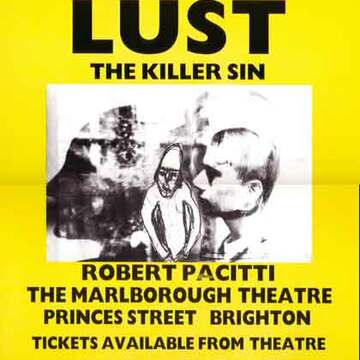 Aputheatre Aputheatre began life as the Aids Positive Underground Theatre Company at the Sussex AIDS Centre and Helpline, and was founded by John Roman Baker and Rod Evan to provide a cultural response to the HIV and AIDS epidemic. The company was quick to establish a reputation for hard-hitting queer drama and as a result controversy often accompanied the company's performances. Surprisingly, there was even opposition at the Sussex AIDS Centre and Helpline, which at the time was attempting a mainstream reinvention to secure funding and considered the work too gay and controversial. Crying Celibate Tears was first performed at the Sussex AIDS Centre and Helpline on the 22 May 1989 as part of the Brighton Fringe Festival, and was the only Aputheatre play to be staged there. It was directed by Geoffrey Coleman, and had the following cast – Eric – Andrew St. John David – Tom Sharpstone Jeff – Nigel Greenhalgh Keith - Graham White Aside - Geoffrey Coleman was a regular customer of mine at the time and two Gardners Café chairs were borrowed to dress the set. The Ice Pick was first performed on 21 May 1990 at the Marlborough Theatre as part of the Brighton Festival. The production was awarded the Zap Award for best theatre jointly with the Satyricon Theatre of Moscow. It was directed by Robert Snell, and had the following cast – Michael – Mark Laville Peter – Nigel Fairs Michael’s father – Ted Dawson Adam – Stephen Israel Tim – Stephen Israel Eric – Stephen Israel Man at party – Ted Dawson Freedom to Party was first performed on 14 May 1991 at the Marlborough Theatre as part of the Brighton Festival. The play was directed by Paul Hodson and had the following cast. Mark – Clive Perrott Simon – Nick Miles Alex – Dino G Houtas Paul - Simon Casson The three plays gained national and international recognition when they were performed, and in 1992 they were presented together for the first time as part of Brighton Lesbian & Gay Pride and the Brighton Festival. ‘Men behave with both courage and barbarism during a war. AIDS is the war of the recent past, present and future. If AIDS is a war, then Brighton is a town on the frontline with the highest incidence of HIV and AIDS outside of London. In human terms that amounts to widespread physical and emotional devastation. Our gay community continues to be the hardest hit of all, and our fight is not only against the virus but also against the day-to-day fascism of prejudice and complacency. We must be alert to those around us who are experiencing distress because of our avoidance of AIDS. This can be in the workplace where people are discriminated against because of their HIV status, but equally in our bars, clubs and social environment. But above all we must be vigilant against the prejudice within ourselves.’ – John Roman Baker, 1992. ‘A significant breakthrough in AIDS theatre’ – Plays & Players, 1989 (Crying Celibate Tears). ‘Guaranteed to outrage the bigots! – Derek Jarman, 1991 (The Ice Pick). ‘Takes the audience into uncharted emotional territory’ – New Statesman & Society, 1991 (The Ice Pick).
 -
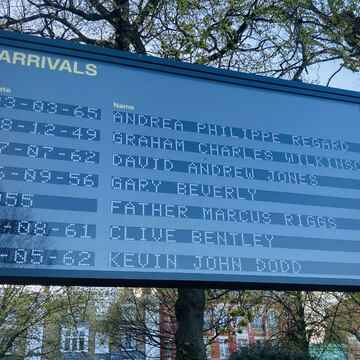 Arrivals + Departures Wednesday 5 May 2021 Artists Yara and Davina create ambitious public artworks that respond to site, context and audience. Their inventive, issue-based work is wide ranging, and uses a lightness of touch that make their works both poetic and universal. Arrivals + Departures invites the public to share the names of those who have arrived and departed on live boards, to acknowledge, celebrate and commemorate. On Wednesday 5 May 2021 Yara and Davina invited me to ‘takeover’ the boards of their Brighton International Festival exhibit in Pavilion Gardens to commemorate the lives of those who died from an AIDS-related illness in Brighton & Hove. It was an honour & a pleasure to be invited to be a part of this wonderful public artwork exploring birth, death, and the journey in between. ‘In the roaring waters, I hear the voices of dead friends Love is life that lasts forever My hearts memory turns to you...’ Andrea Philippe Regard Arrival - 16 March 1965 / Departure - 13 May 1991 Graham Charles Wilkinson Arrival - 08 December 1949 / Died 22 August 1990 (London Lighthouse) David Andrew Jones ‘Cooch’ Arrival - 17 July 1962 / Departure - 18 October 1999 Gary Beverly Arrival - 26 September 1956 / Departure - 23 June 1993 Father Marcus Riggs Arrival -1955 / Departure - 10 July 1998 Clive Bentley Arrival - 07 August 1961 / Departure - 17 August 1994 Kevin John Dodd Arrival - 21 May 1962 / Departure - February 1992 The quoted text comes from the film ‘Blue’ by Derek Jarman.
 -
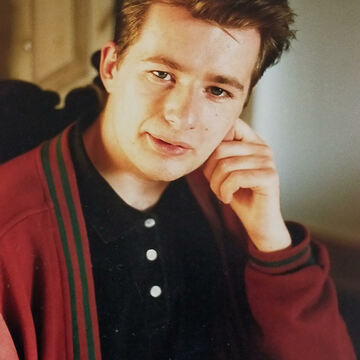 Clive Bentley 7 August 1961 - 17 August 1994 Clive’s Brighton life began at Sussex University when he started an Environmental Science degree in 1979. After this, he embarked on training as an accountant and thanks to a fascination for detail and his meticulous approach; he was set for a successful career. Testing HIV positive started Clive on a journey of personal discovery which would influence the rest of his life and everyone who knew him. At a time when fear and hostility surrounding HIV were at their most hysterical, Clive made the decision to confront his diagnosis head-on. He was deeply committed to understanding the virus and helping others do the same. Along with getting to grips with the mechanics of the disease, Clive invested huge amounts of energy exploring the personal impact of HIV on his life and others. For Clive, who co-founded Body Positive with Graham Wilkinson in 1985, and then became Sussex AIDS Centre & Helpline’s first administrator in 1986, his work was never just a job. Clive was never simply motivated by his own struggle. He was a committed socialist, enraged by all forms of inequality and discrimination. Where his brain held knowledge, his heart was always in touch with the human consequences of treating others as outsiders. Clive also had a great sense of humour and a tremendous wit which was a release from the collective pain of HIV and a way of bringing people together in the face of it. Not only was Clive a highly efficient administrator but also a skilled trainer and group worker, and when he was able, he loved to travel and experience other cultures, especially Italy and Italian food. Clive made a huge impact on the lives of those who knew him and loved him, but also on those who only met him briefly. He was a unique and special individual and those who met him were different because of the experience. It’s in that difference that we have a permanent reminder of his too brief but explosive presence among us.
 -
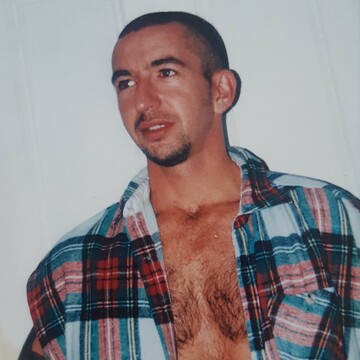 David Andrew Jones, known to everyone as Cooch, entered my life in the late summer of 1987. I was immediately taken by his dark good looks and the amazing twinkle in his Celtic blue eyes. Our relationship was tumultuous, but fun and loving in so many ways. David had his own interests and loved his freedom, so he didn’t settle into work easily, instead he dreamt of going to university to study design - his real passion. In 1994 after completing an Art Foundation course, he secured a place at Kingston University and we moved to a modernist house in Shepperton. These were happy days for us because David loved his course and I’d found my dream job, but sadly things were not to last. In 1995 we both tested HIV positive after naively assuming we’d be negative, and it wasn’t long before I fell ill with pneumonia and cytomegalovirus (CMV) - both linked to the late stages of AIDS. My stomach, eyes and lungs were also badly affected, and I remember the consultant telling me I had six months left to live, but at that time David showed no symptoms. New HIV drugs improved my health but there were hideous side effects to deal with. I needed a level of care that David was happy to give, so we sold our house and toured Europe to enjoy what we both assumed would be the last part of our lives together. David preferred a strict diet and keeping fit to any medication, but in March 1999 he started to get ill and was diagnosed with Non-Hodgkin Lymphoma. Despite advice that any treatment would be pointless, he insisted on a chemotherapy program which left him tied to opiates to help with the pain and a shadow of his former self. He was incredibly brave and still wanted to care for me, but the roles were reversed and in August David had to go into hospital. I slept on the floor by his bed so I could attend to his personal care and dignity, but he never left the ward and died there in October. A big funeral took place with all his friends and family present. David and I spent 12 years together filled with passion, love, adventure and kinky spontaneity. He was different and his own man, but kind and honest. A dare devil who remained true to his own values. Dwi'n dy garu di yn wastad ac am byth – Richard Jeneway
 -
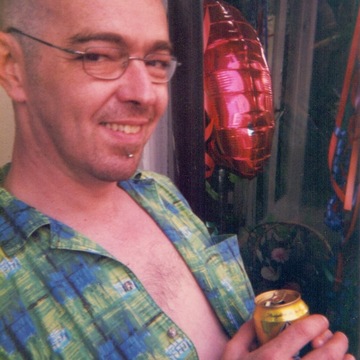 David Waghorn David was born in Andover in 1965. When we met in 1999, many of our friends were still unwell or dying despite recent improvements in Antivirals. David was well known on the scene thanks to working at the Aquarium Bar, Threshers on St James’ Street, and volunteering at Open Door where he did the cooking. Later he also volunteered at Terrence Higgins Trust and led on organising the World AIDS Day Vigil which back then took place on the Old Steine. David had also cared for his previous partner Vince who’d died from AIDS some years earlier, and he studied art at University of Brighton, although he’d have been first to admit his social life and fulfilment often came first! David’s interests were wide ranging, spanning clubs and bars, men and sex, art and reading, science fiction and Dr Who, music of all sorts (especially Bowie), excellent cookery, gardening, and his flat which was an inspiring, colourful and ornamental masterpiece. We often differed in outlook, so our relationship was rocky sometimes, but it was genuinely based on affection. We broke up after three years, but quickly became the best and closest of friends, with a trust, respect and intimacy that transcended our past. I haven’t had a more valued ‘best friend’ since. Sadly, in 2007 David was diagnosed with an advanced and aggressive cancer, common in people with HIV. Tragically, a pathway between the cancer and HIV had been missed, so I often wonder if David would have survived if that hadn’t happened. He wasn’t always confident dealing with health matters, but he rose spectacularly to the challenge presented by invasive operations, unmanageable pain, and a rapid decline in health. Despite everything being against him, he was brave, kind and still giving to others, battling on until his death just before Christmas in 2007. He was more resilient and braver in the face of adversity than I would have thought possible, and I will always remember our last kiss and precious quiet moments together before he died on the Howard 2 Ward, aged 42. David was a man of many facets, unrecognised talents, humour, and a deep appreciation and love for life. When I look at his picture taken at Pride, I feel his inspiration and happiness. Gary Pargeter
 -
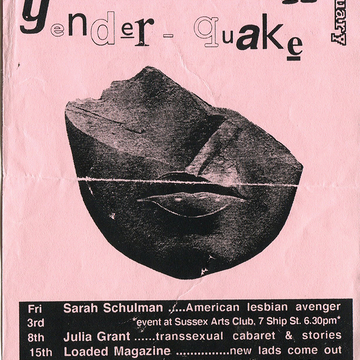 Flyer for a month of Friday nights at The Lift, Queens Road, Brighton, February 1995. Sarah Schulman, Julia Grant, Loaded Magazine, Santa Diamanda.
 -
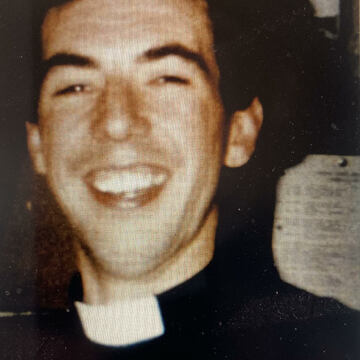 Father Marcus Riggs (1955 – 10 July 1998) When I met Father Marcus Riggs for the first time, the man dressed in full biker leathers was completely unexpected, and I immediately felt the presence of someone quite unique. Marcus wasn’t the kind of human being who just passes through life, instead he lived it to the full, and made a profound impact on those he encountered along the way. When he took up his first Brighton ministry, he lived in the basement flat of the vicarage at St. Michael’s Church. He was soon working at the First Base Day Centre for the homeless, and it was perhaps this experience that inspired him to try to establish a drop-in centre for those diagnosed with HIV in the city. In the early days, all Marcus could offer was peer support to those who needed it from his flat, so he took the decision to make his home an ‘open door.’ And as a result of his persistent lobbying, determination, and refusal to keep quiet, Marcus eventually managed to persuade the Chichester Diocese to fund a day centre in Brighton, and in 1988, Open Door was born at 35 Camelford Street in Kemptown. Despite pressure to do so, Marcus never used Open Door as an opportunity to evangelise, because he believed he’d been ‘sent as one who serves,’ and that people could see good and God in the work. Marcus had an architectural background which proved useful as 35 Camelford Street was in a poor state, with everything needing to be done from scratch in more ways than one. Running the project demanded every ounce of Marcus’s energy but from the start he was helped by a wonderful team of volunteers. Word quickly spread, and it wasn’t long before Open Door was established as the place to go for peer support, understanding, companionship, a listening ear, benefits advice, alternative therapy, and great food. Visits to Open Door always centred around the dining table, and it was this atmosphere that made it feel like home to the many who passed through its doors. When the first specialist HIV ward (6) opened at Hove General Hospital on Sackville Road in 1990, Marcus was an obvious choice for chaplaincy. It was here that he offered spiritual and emotional support to many, including my friend Andrea in his last days. Father Marcus was one of a kind, admired by many and loved by everyone. He died from AIDS illness on the 10 July 1998, and a funeral oration and requiem mass was held at St Augustine’s in Brighton. He was buried at the Bear Road cemetery. In 2009, the Chichester Diocese stopped supporting Open Door, but all was not lost. The great work established by Father Marcus continued when Gary Pargeter, who worked as a chef at Open Door, set up Lunch Positive in 2010. Today this amazing grass roots charity provides a welcoming, safe, and supportive space for people to meet, socialise, make friends, share a healthy meal, and get peer support. The services provided by Lunch Positive have continued to be accepting, non-judgemental, inclusive, and put together and provided by people with HIV for the community, so I’m sure Marcus will be smiling and happy to see his legacy so beautifully maintained.
 -
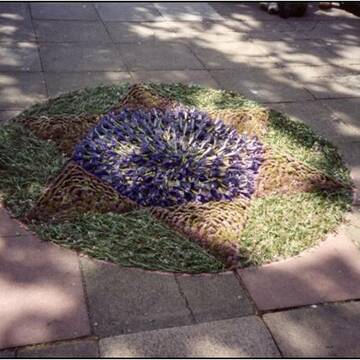 First attempt at creating a Brighton Pride memorial In the mid-90s, legendary LGBT activist Arthur Law (RIP) led a campaign to have a Pride memorial set into the pavement by the Old Steine war memorial. In those days Brighton & Hove Council were not the gay friendly pink £ chasing politicos we know today, and the proposal was roundly rejected. A few of us gathered with Arthur one day to see his design for the memorial which he’d painstakingly picked out using flowers. My memory is not what it was, so if you were there too and remember the date, please get in touch.
 -
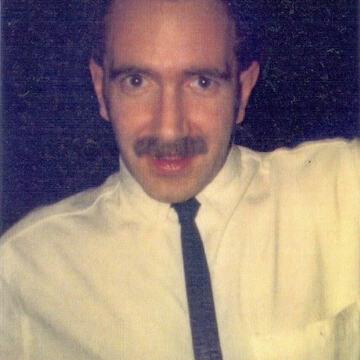 Gary Beverley Gary Beverley was my second partner and the first to die from AIDS. We met on a Saturday in April 1988 at the Bulldog where I was celebrating my 21st birthday. I can still picture it clearly and hear ‘Heaven is a place on earth’ playing, loudly! At the time, I was an aspiring clone, and Gary, 11 years older, had fully achieved clone status! I was drawn to his seductive smile, sparkling blue eyes, humour, wonderful laughter, tight fitting 501’s and perfectly polished DM’s. A five-year relationship began, and we were living together within months. Gary introduced me to new friends and experiences, and started my rapid exploration as a Gay man. It was exciting to share the Brighton Gay scene and beyond with Gary, but we also saw the fear and prejudice of HIV. Each year we lost more friends, saw more diagnosed, and then watched them quickly become seriously unwell, frail and die. Our relationship wasn’t always easy, but I never stopped loving Gary’s animated charm, and before AIDS progressed, his independent spirit. By 1992 Gary’s health had deteriorated and everyone commented on his weight loss and appearance. On a hot summer day in July, we both tested for HIV already knowing the results deep down. Gary had started showing signs of AIDS-related dementia, and the wonderful bright, vivacious, and independent man I loved quickly deteriorated with awful symptoms and eventually total loss of capacity. I’m sure others recall how distressing AIDS-related dementia was. I spent every day with Gary, right up to his death, willingly and wholeheartedly there as the awful disease rapidly progressed and diminished his mind and body. Throughout, he had occasional glimmers and signs of recognition, smiles and shared laughter, an outstretched hand for love and affection, and almost until the last moment, still cried out for me ‘my Gary.’ We were fortunate to be supported by loving close friends, Open Door, wonderful nurses & professionals, and so many others with HIV who stood with us in solidarity. I will always love Gary (tearful now) and remember the massively different time of HIV and AIDS, which for those who survived has been entirely life changing. Words by Gary Pargeter - 2021
 -
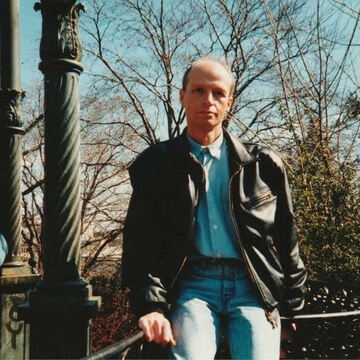 Graham Charles Wilkinson Graham Charles Wilkinson was one of small group of gay men in London who shared a vision for innovative new centres for people living with HIV in the UK. The group started to meet and talk about their ideas at the flat of Christopher Spence OBE, who’d later become director of the Lighthouse in Ladbroke Grove when it opened in 1986. Graham was acutely aware that Brighton was desperate for services to help the growing numbers affected by the epidemic, so he set to work bringing the vision to the coast. Determined and courageous, Graham decided to quit his job to found the Sussex AIDS Helpline in a ‘grotty’ little office on Brighton’s Western Road in October 1987. In the early days, the helpline was a very hands-on affair with Graham and a few friends answering all the calls, but despite its humble beginnings, it soon became essential for anyone needing good advice, compassion and the facts. By all accounts Graham was a shy man who found the constant battles, resistance and stigma of the times hard to manage against the backdrop of his own illness. Sometimes the stress of the situation would get the better of him, but before long the light would appear in his face alongside an infectious giggle that anyone who knew him will never forget. By all accounts, Graham was a loving and supportive man who could be relied on to give someone a cuddle. Graham lived on Devonshire Place in Kemptown with his partner and playwright John Roman Baker at the time. They used their flat as a centre for the fundraising and lobbying which helped Graham to realise his vision when the Sussex AIDS Centre and Helpline opened at 3 Cavendish Street in 1988. Despite his poor health Graham played a key role in shaping, influencing and establishing the HIV services in Brighton which continue today, and his tireless commitment served to directly impact and improve the quality of lives of countless people living with HIV in Brighton. Graham ended his days at the London Lighthouse on 22 August 1990 surrounded by friends. His service was held in St Peters Church with standing room only - a testimony to the love and respect that existed for him in the city. - Danny West - 2021 22 August 2021 This evening, John and I are listening to Donna Summer and remembering Graham Wilkinson who died this day 31 years ago at London Lighthouse (at the time there was no hospice for people with HIV/Aids in Brighton). He was a tireless gay rights campaigner from the 1970s onwards and then in the 1980s fought tooth and nail as co-founder and director of the Sussex Aids Centre & Helpline (now THT South). His work, spirit and achievements should not be forgotten. It was a time when gay men in particular, but also others with HIV, were collateral damage in a deeply Conservative society where sadly even within our own community we had to fight self-hatred while the government held out for a feared heterosexual epidemic which of course (thankfully) did not materialise. Graham inspired and touched the lives of so many, but to John and myself he was so much more. He was our family and is deeply missed. Words by Rod Evan & John Roman Baker
 -
 HIV Hour interview which was broadcast on 13 May 2021 on Brighton local community radio, Radio Reverb.
 -
 "Interview with John Rosewarn for Queer in Brighton Oral History Project (28 May 2013), interviewed by ??. Oral history interview collected as part of the Queer in Brighton project 2013-2014. Life history from Taunton to Brighton DOB 1944 circa - leaves home at 18 (gets thrown out by father after being caught in bed with dad’s best mate) goes to London -sex worker from 18 to 24 years of age 1961 to 1967 - moves to Brighton 1969. Trains as a nurse - lives in Brighton- work students in Hayward’s Heath. Moves to Spain from 1991-1999. Talks about sex work, cottaging and it’s demise in the early 1980s, celebrities, work as a nurse, homophobia, bars in Brighton, his relationship with older man - open relationship- promiscuity, first Pride, estrangement from parents, drag persona. "


