


Search results
-
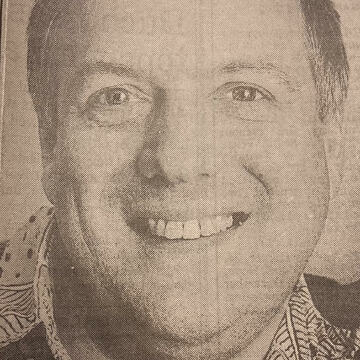 Alan Clarke Alan Clarke was the second director of the Sussex AIDS Centre and Helpline on Cavendish Street and worked hard to raise awareness on AIDS related issues. He made the news in 1991 after calling for Brighton & Hove businesses to give their employees a personal supply of condoms to help stop the spread of the virus. Alan tested positive in 1988, and died peacefully aged 46 on the 31st July 1996. His funeral service took place at Woodvale Crematorium on the 7 August, and as a mark of respect the Sussex Aids Centre and Helpline closed that day. Alan requested that no flowers be sent, but asked instead for donations to the Sussex AIDS Centre Equipment fund and the Sussex Beacon.
 -
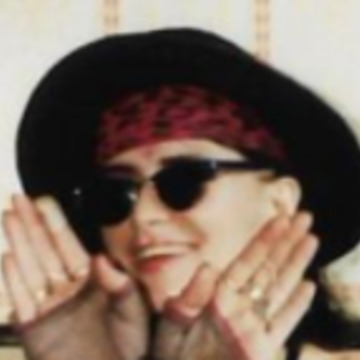 I met Ann Marie and her partner Benjie for the first time in the late 1980s when I volunteered at the Sussex AIDS Centre & Helpline. The pair were inseparable and generally nocturnal, but sometimes they’d be seen strolling along St James’s Street making eyes turn as they passed. Benjie clearly modelled himself on Jimi Hendrix whilst Ann Marie was pure Goth with a slim figure and translucent porcelain skin. You could be sure they'd be the first at the chemist for their Methadone script. Their basement flat on Elm Grove was an Aladdin’s cave festooned with trinkets and fabric, shrouded by curtains which rarely opened. A chaotic space which echoed their lives. It’s no secret that the pair struggled with addiction but they were devoted to each other and somehow managed to survive for a while at least. Due to their vulnerability and poor health, Ann Marie and Benjie were rehoused in a flat on Tyson Place in Kemptown where Avee Isofa Holmes also lived at the time. She remembers Ann Marie as a ‘lovely serene quiet soul’ who was rarely seen unless she needed to borrow shampoo. Ann Marie’s family often visited from Ireland but despaired at her circumstances and lifestyle. Her ravaged immune system struggled with injection related wounds and as a result she was plagued by infections which would eventually prove too much for her. Ann Marie died in hospital in October 1991. Wolf Impala - a poem by Ann Marie published in the the Sussex AIDS Centre Newsletter (1991) In the cave of my brain where pulps a green throbbing light edges stretching bursting at my lovers contact and precious heart in the centre gold shafts oozing juice lubricating my hard strong magical thoughts idealism strikes but pain remains in the cave of my brain singing a sweet backward ballad I feel as many as every human living as mirrored pupiled eyes stare as the globe throws itself smashing against my brains walls a fucking elegant unpolish bang as different countrys continents races feel the impact of the cacophony of billions united inside the cave of my brain I ache an orgasm of love for all
 -
 Aputheatre Aputheatre began life as the Aids Positive Underground Theatre Company at the Sussex AIDS Centre and Helpline, and was founded by John Roman Baker and Rod Evan to provide a cultural response to the HIV and AIDS epidemic. The company was quick to establish a reputation for hard-hitting queer drama and as a result controversy often accompanied the company's performances. Surprisingly, there was even opposition at the Sussex AIDS Centre and Helpline, which at the time was attempting a mainstream reinvention to secure funding and considered the work too gay and controversial. Crying Celibate Tears was first performed at the Sussex AIDS Centre and Helpline on the 22 May 1989 as part of the Brighton Fringe Festival, and was the only Aputheatre play to be staged there. It was directed by Geoffrey Coleman, and had the following cast – Eric – Andrew St. John David – Tom Sharpstone Jeff – Nigel Greenhalgh Keith - Graham White Aside - Geoffrey Coleman was a regular customer of mine at the time and two Gardners Café chairs were borrowed to dress the set. The Ice Pick was first performed on 21 May 1990 at the Marlborough Theatre as part of the Brighton Festival. The production was awarded the Zap Award for best theatre jointly with the Satyricon Theatre of Moscow. It was directed by Robert Snell, and had the following cast – Michael – Mark Laville Peter – Nigel Fairs Michael’s father – Ted Dawson Adam – Stephen Israel Tim – Stephen Israel Eric – Stephen Israel Man at party – Ted Dawson Freedom to Party was first performed on 14 May 1991 at the Marlborough Theatre as part of the Brighton Festival. The play was directed by Paul Hodson and had the following cast. Mark – Clive Perrott Simon – Nick Miles Alex – Dino G Houtas Paul - Simon Casson The three plays gained national and international recognition when they were performed, and in 1992 they were presented together for the first time as part of Brighton Lesbian & Gay Pride and the Brighton Festival. ‘Men behave with both courage and barbarism during a war. AIDS is the war of the recent past, present and future. If AIDS is a war, then Brighton is a town on the frontline with the highest incidence of HIV and AIDS outside of London. In human terms that amounts to widespread physical and emotional devastation. Our gay community continues to be the hardest hit of all, and our fight is not only against the virus but also against the day-to-day fascism of prejudice and complacency. We must be alert to those around us who are experiencing distress because of our avoidance of AIDS. This can be in the workplace where people are discriminated against because of their HIV status, but equally in our bars, clubs and social environment. But above all we must be vigilant against the prejudice within ourselves.’ – John Roman Baker, 1992. ‘A significant breakthrough in AIDS theatre’ – Plays & Players, 1989 (Crying Celibate Tears). ‘Guaranteed to outrage the bigots! – Derek Jarman, 1991 (The Ice Pick). ‘Takes the audience into uncharted emotional territory’ – New Statesman & Society, 1991 (The Ice Pick).
 -
 I met Benjie at the care home I was working at on Sillwood Street when he was about 18 years old. He apparently came from a good family in Jamaica and wanted to study to be a vet, but because of his drug problem he’d ended up in the care home. I didn’t see him again for many years until he walked into the Sussex AIDS Centre and Helpline on Cavendish Street announcing his presence with ‘hello pea pod’ when he saw me. It turned out he was also living in the same block as me at Tyson Place! I started training to be a volunteer at the Sussex AIDS Centre when it was based in just one room near London Road. Years later when Princess Diana officially opened the place on the 12th of July 1990, Benjie was there too. When he said ‘how's Charlie boy then’ to her I nearly died, but she took it all in her stride and smiled. When Our House Body Positive was up and running, I organised a trip to Arundel Castle. There were eight of us with my dear friend James Etheridge driving. Benjie asked me if we could go to the Castle café for some hot chocolate. When I turned my head at the counter, I saw Benjie tipping sugar sachets into his hippy bag, and I was horrified. He just grinned and said, ‘we've paid for them.’ He was so beautifully dressed that day in an Edwardian green velvet frock jacket with lacy cuffs and black trousers tucked into high leather boots. One Christmas Eve (his last) I came home at 1 in the morning to be greeted by four fire engines. Thick smoke was billowing from his bedsit and the fire was so bad they had sealed off the entire 3rd floor. I think Benjie stayed at the hospital that night. He came back in the morning and asked me to go upstairs because he thought his cat was still in the flat, but I couldn't find it, or any remains. The fire started because he’d been drinking with a friend and using drugs by candlelight because they’d run out of electricity. Benjie was rehoused, but he sadly passed away the following Easter after a three-day Methadone binge. It was an electric heater that caused a blaze this time, and he died in hospital soon after from smoke inhalation. Words by Avee Tsofa Holmes
 -
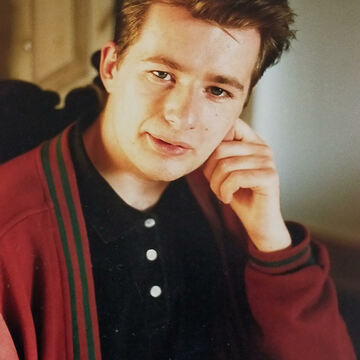 Clive Bentley 7 August 1961 - 17 August 1994 Clive’s Brighton life began at Sussex University when he started an Environmental Science degree in 1979. After this, he embarked on training as an accountant and thanks to a fascination for detail and his meticulous approach; he was set for a successful career. Testing HIV positive started Clive on a journey of personal discovery which would influence the rest of his life and everyone who knew him. At a time when fear and hostility surrounding HIV were at their most hysterical, Clive made the decision to confront his diagnosis head-on. He was deeply committed to understanding the virus and helping others do the same. Along with getting to grips with the mechanics of the disease, Clive invested huge amounts of energy exploring the personal impact of HIV on his life and others. For Clive, who co-founded Body Positive with Graham Wilkinson in 1985, and then became Sussex AIDS Centre & Helpline’s first administrator in 1986, his work was never just a job. Clive was never simply motivated by his own struggle. He was a committed socialist, enraged by all forms of inequality and discrimination. Where his brain held knowledge, his heart was always in touch with the human consequences of treating others as outsiders. Clive also had a great sense of humour and a tremendous wit which was a release from the collective pain of HIV and a way of bringing people together in the face of it. Not only was Clive a highly efficient administrator but also a skilled trainer and group worker, and when he was able, he loved to travel and experience other cultures, especially Italy and Italian food. Clive made a huge impact on the lives of those who knew him and loved him, but also on those who only met him briefly. He was a unique and special individual and those who met him were different because of the experience. It’s in that difference that we have a permanent reminder of his too brief but explosive presence among us.
 -
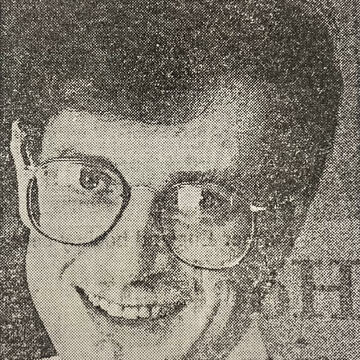 Dr Gordon McPhail was a clinical medical doctor at the Claude Nichol Clinic, when it was located in the Royal York building on the Old Steine - now a YHA hostel. He looked after patients with HIV and AIDS at the clinic between 1988 and 1990 and was quoted as saying “I jumped in at the deep end and I’m still learning about AIDS, as we all are. AIDS was thrust upon us, and we have had to learn very quickly, but I am a far better doctor now than when I started.” Dr McPhail was also a trustee of the Sussex AIDS Trust, and in 1989 he helped launch a £2.5 million appeal to build a hospice on a disused hospital site in Bevendean with the motto ‘living with AIDS, not dying with it.’ He believed the facility was vital to provide convalescent care for AIDS patients, and respite for the people looking after them. His dream was realized when the Sussex Beacon opened its doors in 1992. Gordon died of bronchial pneumonia, an AIDS related illness, at his Brighton home on 31 October 1991 aged 34. Colleagues described him as an excellent doctor and a very caring man. He was also a devout Quaker, and asked that friends and colleagues attend any service they chose after his death. A memorial meeting was held for him at the Friends Meeting House in Ship Street at 2.30pm on 10 November 1991.
 -
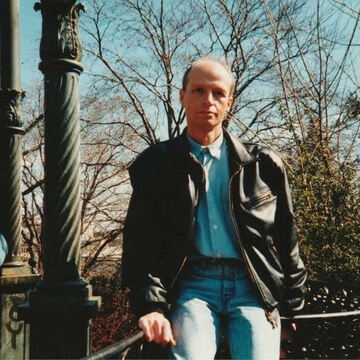 Graham Charles Wilkinson Graham Charles Wilkinson was one of small group of gay men in London who shared a vision for innovative new centres for people living with HIV in the UK. The group started to meet and talk about their ideas at the flat of Christopher Spence OBE, who’d later become director of the Lighthouse in Ladbroke Grove when it opened in 1986. Graham was acutely aware that Brighton was desperate for services to help the growing numbers affected by the epidemic, so he set to work bringing the vision to the coast. Determined and courageous, Graham decided to quit his job to found the Sussex AIDS Helpline in a ‘grotty’ little office on Brighton’s Western Road in October 1987. In the early days, the helpline was a very hands-on affair with Graham and a few friends answering all the calls, but despite its humble beginnings, it soon became essential for anyone needing good advice, compassion and the facts. By all accounts Graham was a shy man who found the constant battles, resistance and stigma of the times hard to manage against the backdrop of his own illness. Sometimes the stress of the situation would get the better of him, but before long the light would appear in his face alongside an infectious giggle that anyone who knew him will never forget. By all accounts, Graham was a loving and supportive man who could be relied on to give someone a cuddle. Graham lived on Devonshire Place in Kemptown with his partner and playwright John Roman Baker at the time. They used their flat as a centre for the fundraising and lobbying which helped Graham to realise his vision when the Sussex AIDS Centre and Helpline opened at 3 Cavendish Street in 1988. Despite his poor health Graham played a key role in shaping, influencing and establishing the HIV services in Brighton which continue today, and his tireless commitment served to directly impact and improve the quality of lives of countless people living with HIV in Brighton. Graham ended his days at the London Lighthouse on 22 August 1990 surrounded by friends. His service was held in St Peters Church with standing room only - a testimony to the love and respect that existed for him in the city. - Danny West - 2021 22 August 2021 This evening, John and I are listening to Donna Summer and remembering Graham Wilkinson who died this day 31 years ago at London Lighthouse (at the time there was no hospice for people with HIV/Aids in Brighton). He was a tireless gay rights campaigner from the 1970s onwards and then in the 1980s fought tooth and nail as co-founder and director of the Sussex Aids Centre & Helpline (now THT South). His work, spirit and achievements should not be forgotten. It was a time when gay men in particular, but also others with HIV, were collateral damage in a deeply Conservative society where sadly even within our own community we had to fight self-hatred while the government held out for a feared heterosexual epidemic which of course (thankfully) did not materialise. Graham inspired and touched the lives of so many, but to John and myself he was so much more. He was our family and is deeply missed. Words by Rod Evan & John Roman Baker
 -
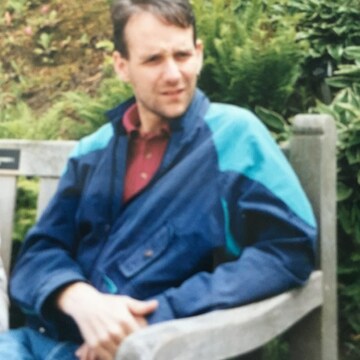 Kevin John Dodd When I think of Kevin John Dodd, the memory that ignites is the one of him emerging from the Pepper-pot toilets by Queens Park one summer dressed in a T shirt and shorts. When he saw me walking into the park, his face broke into a broad grin and we both burst out laughing, because he knew that I knew what he’d been getting up to. I met Kevin at the Sussex AIDS Centre and Helpline when I was a volunteer there, and we got along straight away due to a shared sense of humour and a love of self-deprecation. Kevin was a member of Our House BP, and also sat on the board of the Sussex AIDS Centre as their representative. When Kevin died in February 1992, his service was conducted by Father Marcus Riggs, and took place at the Woodvale Crematorium off Lewes Road like many in those days. I remember the order of service had a black and white outline of Mickey Mouse on the cover page which made me smile. The music Kevin chose for his funeral was an eclectic mix. I remember ‘Nimrod’ from Elgar’s Enigma Variations in particular filling the space with undulating dissonant chords and an emotional resonance that had me sobbing into my sleeve. Later in the service ‘Reach out and touch’ by Diana Ross also hit the same spot albeit in a very different way. I think it was Kevin’s funeral that made me think for the first time about the songs that I might use to serenade my own passing, because back then life seemed so fleeting and death was everywhere. I will always remember Kevin for being cheeky, confidant, funny and completely fearless and all these years later, he is still missed by many. Harry Hillery 2021
 -
 Maurice’s story - 19 December 1987 ‘I developed swellings in my glands and my bowel movements became difficult. I told my doctor, whose reaction was “glands, that’s nothing - feel mine. I hope you’re not becoming obsessed with your bowels.” I was sent for a blood test, but as there was no HIV test in 1982, I was told that I must have picked up a virus which had now gone. But I think that it could have been HIV as two years ago I was diagnosed as being antibody positive. Since that day, I have to thank the Sussex AIDS Helpline, from whom I had support from the first moment of the shock of my diagnosis. I very soon joined the Helpline myself - it was the only way I could cope with everything. I had to know as much as I could about AIDS. After a while I realised I wanted to work with people with AIDS, so I did a course in massage techniques, so I could offer something useful to the people I worked with. Because I have had a full life, I can’t be too sad, though I’m not ready to go yet and I’m going to put up a fight. The people I feel sorry for are the young ones who thought they had a full life to lead, and now live in fear and doubt. Today at St. Peter’s Church, I witnessed the most beautiful service of my life – a memorial to those in Sussex who have died of AIDS. Bless whoever in the Helpline who first thought of this. I shall remember it for the rest of my life, however long that might be, and I shall remember my departed friends.’ Maurice died on the 12 January 1988, quite suddenly but peacefully.
 -
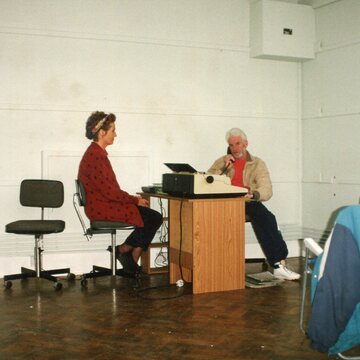 Our House Body Positive valued the services offered by Open Door which was open weekday daytimes, but it was felt there was a need for a peer led service operating at weekends. The very first meeting took place in January 1991 at a Hereford Court flat on Lavender Street, and for the first six months the group met in people’s homes where a Sunday lunch would be cooked by the host, supported by other members of the group. After six months we were able to use a social services family centre building (now demolished) in Ivory Place, off Morley Street for our Sunday lunches. This gave us use of a fully equipped commercial kitchen, and sufficient space to expand. The group was a varied mix of male, female, varied ethnicities, straight, gay, positive and untested supporters which allowed people of different backgrounds to get to know each other and to support one another. The management of the building would not allow us to use their plates, cups or cutlery, so we had our own which we took to and from the centre each Sunday. The larger space allowed us to have themed discussions or a speaker after lunch each week, and the room to invite a variety of complementary therapists to offer their services (something that I managed). As the group grew along with its ambitions, we realised that a more organised structure was needed, so one Sunday we held a group workshop to explore what this might entail alongside things like a constitution and named officers. Some of our early active members (including Steven Chartwell and David Lambourne) disagreed with this development and felt it was time to leave the group. The experience of the Sussex AIDS Centre and Helpline locally and larger national groups made some people wary of ‘creeping corporate bureaucracy’. In early Spring 1993, we were able to lease a small suite of two rooms, kitchenette and toilets above the old fruit and vegetable market in Circus Street, and appointed Paul Overton (pictured in Circus Street) as our first salaried Chair. This allowed us to expand our services and the support we could provide, but we could no longer have Sunday lunches, so the anarchic homely nature of the group began to change. Around this time ‘Our House BP’ with its homely logo, changed its name to Brighton Body Positive. Although this was a clearer name which no longer required explanation, it came without the ownership implied in ‘Our’, or the homeliness implied in ‘House’. In 2006 the group moved to Community Base on Queens Road, but by then it’s identity as a self-help group had completely changed to a professional organisation beholden to the demands of its funders (social services, local council, etc). Several years later around 2010 it finally closed its doors. For a couple of years, it’s archive was kept in a portacabin at the Sussex Beacon, but sadly this has since been lost. Jim Stanford
 -
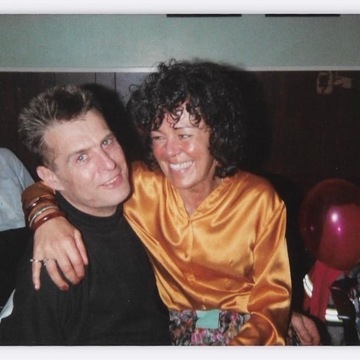 Paul Theobald had already been diagnosed HIV+ when we met and became good friends. He lived just opposite the Sussex AIDS Centre and Helpline (SACH) with his partner Terry Morgan, and I lived nearby. Paul was worried that there were no weekend services for people with HIV, so he decided to start group meetings at his flat on a Wednesday. Back then SACH had a telephone helpline seven nights a week and a buddying service staffed by volunteers like me. There was also a small BP group, but volunteers were not allowed to go unless invited. I was fortunate enough to be invited alongside a paid worker we called ‘mother.’ Open Door provided lunch Monday to Friday and I cooked vegetarian food there every Tuesday. Paul’s meetings were popular because he was very charismatic, and soon something bigger was needed, so Sunday lunches were started in different homes each week, alternative therapies were introduced, and it wasn’t long before Our House Body Positive was born in 1992. Paul had it registered as a charity and premises above the old fruit & veg market in Circus Street were found. Paul was the first Chair we had, and I started fundraising with bric-a-brac stalls in the summer. I remember one Easter we put an advert in the Evening Argus for unwanted bits & pieces. I went down to Paul’s flat early one Saturday after stopping to buy 30 bunches of daffodils with our own money. We then drove all over to the homes of people who’d donated, and as people gave us their items, we wished them Happy Easter and gave them daffodils as a thank you. Paul worked very hard for OHBP and after a while it started affecting his health, so he stepped down. After his relationship with Terry ended, he decided to move back to London into a ground floor Flat in Islington where I visited a couple of times. His health improved, and he was soon back to the Paul we all knew. Sadly, we lost touch until 2004 when he phoned me to say he'd like to come to Brighton for a few days if I promised not to tell anyone. He said he'd let me know when he was coming, but alas that's the last I heard of him.
 -
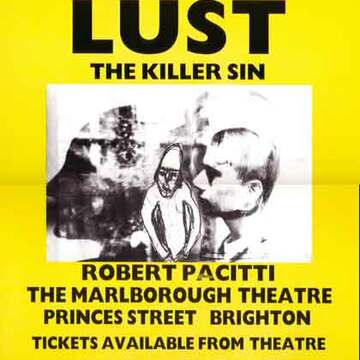
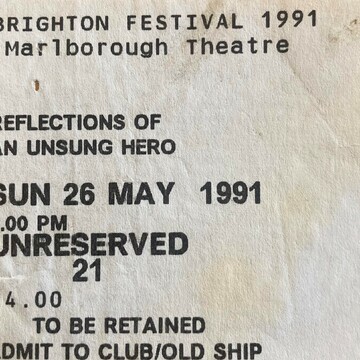 Reflections of an Unsung Hero Reflections of an Unsung Hero was a solo performance created by Robert Pacitti, directed by Colin Schantz and commissioned by Aputheatre (AIDS Positive Underground Theatre Company) to cherish the work of Graham Wilkinson. Playwright John Roman Baker was so impressed by Robert’s performance of ‘Lust’ during his second year at Art School in 1990, that he approached him to create a performance to honour Graham, and gave him full copies of Graham’s diaries to work with. The commission asked for a radical live performance that responded to the content of the diaries, Graham’s Gay Liberation Front and extensive AIDS activism, and his significant lifetime legacy fighting for change. Because Graham had lost his sight, Robert wore an eye mask and travelled around Brighton on the bus to immerse himself in the role. The play was rehearsed at the Sussex AIDS Centre and Helpline in readiness for the 1991 Brighton Festival, but was nearly de-railed when Gavin Henderson, the Brighton Festival director, pulled the play from the programme due to its subject matter and the theatre company name. Lindsey Kemp was one of the festival headliners that year, and when news reached him that the play had been removed from the programme, Robert was asked to meet at his hotel. When Lindsey heard the full story, he gave Robert £500 in cash so that the play could go ahead, and had it reinstated in the festival programme. The play was performed at the Marlborough Theatre on the 26 May 1991.
 -
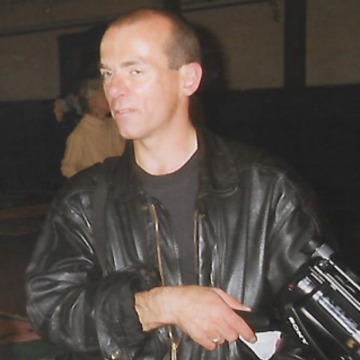 I met Shaun at a Body Positive Group meeting at the Sussex AIDS Centre and Helpline (SACH) which I’d been extremely privileged to be invited to. We also met sometimes at Open Door where he sometimes went for lunch. Shaun was a quiet person who kept himself to himself most of the time, but he could be quite outspoken if he felt something was wrong. He was helped a great deal by his partner Nick who was a volunteer at SACH and always very smartly dressed. Shaun was a regular at the Bulldog pub but didn’t talk much about his personal life. Words by Avee Tsofa Holmes
 -
 Sussex AIDS Centre “We held the first Brighton and Hove public meeting on AIDS in 1984 at offices in Lansdowne Place, Hove. Graham Wilkinson and I split the small cost of hiring the room and invited someone from the recently formed THT to come along and explain what they were doing in London. Both Graham and I had joined THTs small Social Work group which met at their original tiny offices in London – at that time only consisting of a couple of rooms. So, it was at this first public meeting that a handful of us volunteered to set up the Sussex AIDS Helpline. We knew the person who at the time managed the Well-Women Clinic above a shop on the corner of Western Road and Waterloo Street in Hove. They very kindly agreed to let us use their offices in the evening when they were closed and allowed us to use a telephone line for free. Graham and I both worked together as Social Workers in the Hanover Team based opposite St Peters Church, and we managed to get permission to use our offices in the evening for training and support groups. As professional social workers we were able to put together a training programme for the early volunteers to help handle phone calls. Graham or I would either take the calls ourselves, or be there as support for the other volunteers. For the first 2 years Sussex AIDS Helpline got no official funding. We managed to get by with volunteer time and effort, meeting in each other’s homes, raising awareness in pubs and clubs, and by borrowing facilities and resources from the Well Women's Clinic and Social Services Hanover Team. A couple of years later we became the Sussex AIDS Centre and Helpline.” Clive Stevens
 -
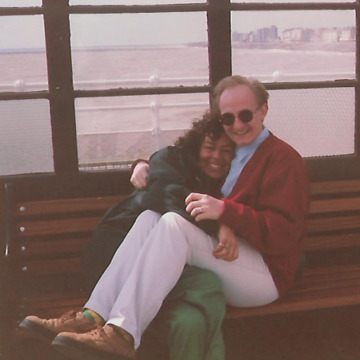 Tony Robinson was a very special friend. We met on my first evening as a trainee at the Sussex AIDS Helpline in the summer of 1987. We received lots of calls in those early days. Tony and I really hit it off from the beginning and it turned out we lived just a couple of minutes away from each other. After about a week of training, one night Tony asked me to answer the phone. I didn’t think I was ready, but I did it and it went well. One day he said he admired me because I oozed confidence, but he was the one who gave me my confidence. Tony and his partner lived in Upper rock Gardens next to St. Mary’s Church and I was at Tyson Place (affectionately known as ‘Fairy Towers’). He worked for the Probation service and commuted to London where his job was to read all the newspapers every day. He was a very quiet person with a lovely gentle personality, and originally from Milton Keynes, where his mother still lived. She knew he was gay, but wasn’t happy about it, so he rarely visited because he couldn’t tell her he was HIV+. Tony contracted Pneumocystis pneumonia (PCP) and was given a Nebuliser which he kept at my place because I had a balcony and we could open the door and put the hose outside. This was a daily routine in the afternoon after he’d finished work. I started working at BBC Radio Sussex on a two-year contract through the job opportunity scheme. Tony met me after work one day at 1pm carrying a lovely wicker picnic basket and told me we were going to Queens Park for the afternoon. We sat down on the grass and to my amazement he proceeded to lay out the Clarice Cliff plates and finery. Tony was so camp, but in a quiet way. He’d regularly come around to my place armed with a large bottle of Baileys, sometimes close to tears if there’d been a row, and we'd go through the whole bottle in one evening. Tony loved to travel and once arranged for my daughter Giselle and I to travel to Pefkos in Rhodes. We loved it and Giselle met someone and ended up living there for eleven years. The last time he went on holiday was to Bali. I lectured him on not having ice cubes in his drinks, cleaning his teeth with tap water and avoiding uncooked food, but he came down with Typhoid and ended up in a London hospital when he returned. He asked his partner not to tell me about it, and passed away at 9.30pm on 7 May 1993. We shared many secrets together and really supported one another. He really was my buddy and I still miss him very much.


