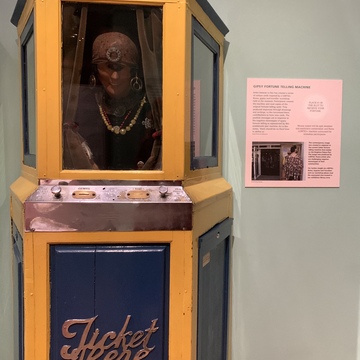
Artist Delaine le Bas created a series of unique cards to be dispensed by the this arcade machine inspired by an LGBTIQ+ Roma, Gysepy and Traveller workshop held at Brighton Musuem & Art Gallery as part of the Queer the Pier exhibition making process. Participants viewed the machine and read copies of the original fortune telling cards. The produced responses through drawings and writings. Le Bas harnessed these contributions to design new cards. The positive messages are in response to the negative stereotypes of gypsy fortune telling as represented by this problematic machine. As Le Bas states "There should be no fixed lines to define us." By responding with creative collective action to this artefact, and inserting new interpretation into it, the Queer the Pier Roma project has "queered the past".
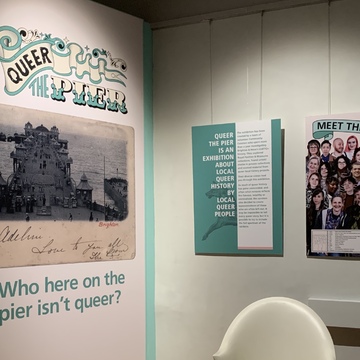
The Queer the Pier exhibition was founded on the premise that Brighton and Hove's current reputation for creativity and inclusivity is founded on it's long history of LGBTIQ+ community artistry, protest and visibility. The community curatorial team therefore wanted to challenge the premise that "bed notch" proof was required to evidence the existence of a local LGBTIQ+ past. Using a postcard depicting Brighton Palace Pier, the exhibition opens by asking the viewer instead, to prove who WASN'T queer? The reverses the premise and makes it obvious the disproportionate levels of proof required by the queer community to have their existence recognised, as compared with the straight community.
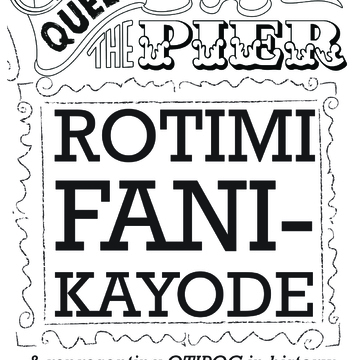
Zine in which Sequoia Barnes, Ven Paldano, and KUCHENGA discuss the importance of historical representation of LGBTIQ+ communties of colour, in relation to the work of Rotimi Fani-Kayode and the photoshoot organised for QTP in response to Fani-Kayode's work.
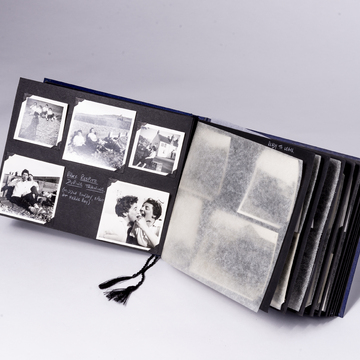
Tommy and Betty’s collection of personal memorabilia was found in a house clearance sale in Worthing in 2017. It includes a lifetime together of photo albums, all taken on Betty’s Icarex Camera, c1966.